
Most of us never think about the microscopic cleaning system working inside our lungs every time we breathe. Millions of tiny, hair-like structures called cilia help keep the airways clean by moving mucus, germs, and debris out of the respiratory system.
For people living with Primary Ciliary Dyskinesia (PCD), that cleaning system doesn't
work properly. And when the cilia can't do their job, the effects can build up over time—leading to mucus retention, repeated infections, inflammation, airway damage, and difficulty breathing.
What Are Cilia?
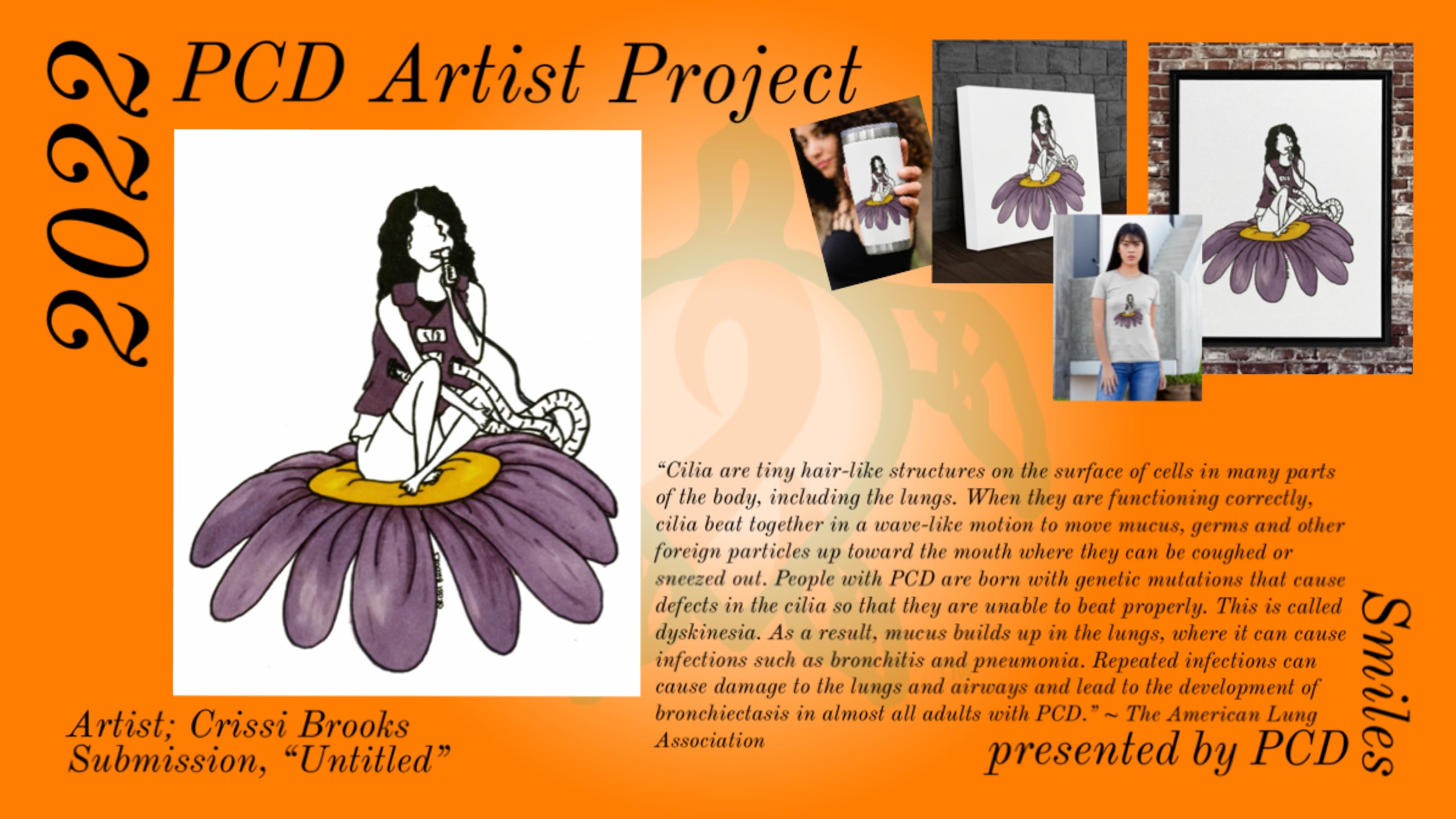
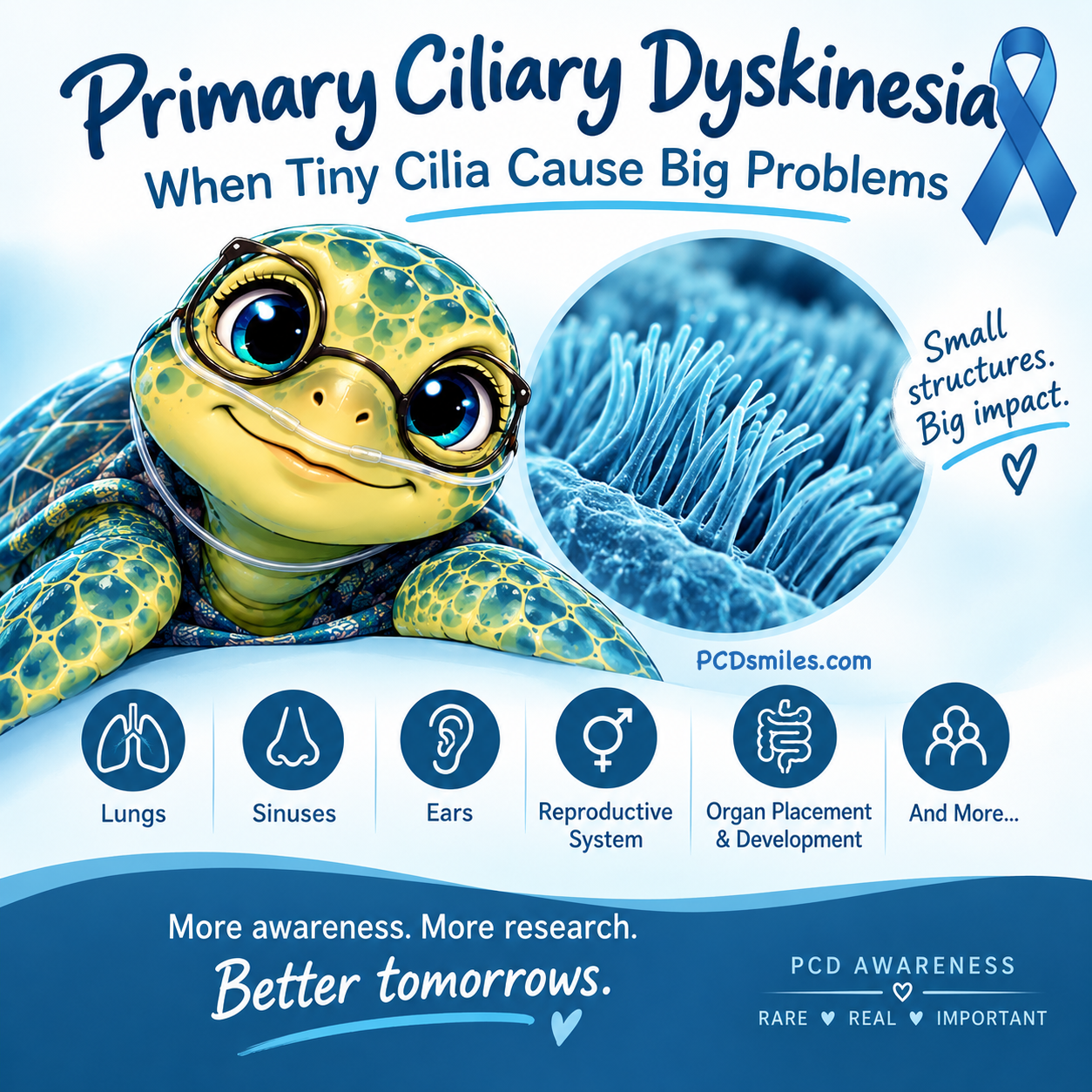
Cilia are microscopic structures that line the airways and other parts of the respiratory system. In healthy lungs, they beat together in a coordinated, wave-like motion.
Think of them as a microscopic conveyor belt.
Mucus naturally coats the airways and traps things we breathe in, including dust, bacteria, viruses, and other particles. The cilia continually move that mucus toward the larger airways so it can eventually be coughed out or swallowed.
This process is part of the body's mucociliary clearance system.
In PCD, genetic changes affect the structure or movement of the cilia. They may be missing, shortened, or unable to move normally. Instead of efficiently moving mucus out, the cleaning system becomes impaired.
The result: mucus can remain trapped inside the lungs.
What Happens When Mucus Gets Trapped?
When mucus isn't cleared effectively, it can accumulate inside the airways.
That retained mucus creates an environment where bacteria and other microorganisms can remain in the lungs longer than they should. This can contribute to repeated respiratory infections.
People with PCD may experience:
- Chronic or daily coughing
- Recurrent bronchitis
- Repeated pneumonia
- Frequent respiratory infections
- Increased mucus production or retention
- Inflammation within the airways
For someone with PCD, these aren't necessarily isolated illnesses that happen once in a while. The underlying problem with mucus clearance can make respiratory problems a long-term part of life.
The Cycle of Infection and Inflammation
One of the most important things to understand about PCD is that the problems can build upon one another.
The process can look something like this:
Abnormal cilia
↓
Mucus isn't cleared effectively
↓
Mucus remains trapped in the airways
↓
Bacteria can remain in the lungs
↓
Respiratory infections occur
↓
Inflammation develops
↓
Repeated infection and inflammation can damage the airways
↓
Lung function can decline over time
This cycle is one reason protecting lung health is such an important part of managing PCD.
PCD Can Cause Permanent Airway Damage
Repeated infections and chronic inflammation can eventually change the structure of the airways.
One important complication is bronchiectasis.
Bronchiectasis occurs when the bronchial tubes become permanently widened and damaged. Once the airways have been structurally altered, they can become even more difficult to clear.
This can create another cycle:
Mucus retention → infection → inflammation → airway damage → even more difficulty clearing mucus.
That is why preventing and treating respiratory infections and maintaining regular airway clearance are so important for people with PCD.
Why Breathing Can Become Harder
PCD doesn't simply cause a person to "have a cough."
When mucus remains in the airways, infections occur repeatedly, and inflammation damages lung tissue and airways, the lungs may not work as efficiently.
The result can include:
- Shortness of breath
- Reduced exercise tolerance
- Increased fatigue
- Difficulty getting enough oxygen, particularly during respiratory flare-ups
- The need for supplemental oxygen in some individuals with more advanced lung disease
The severity of symptoms varies considerably from person to person.
PCD is not the same experience for everyone.
Some people may have relatively preserved lung function for many years, while others develop significant lung disease.
The Difference Between Healthy Cilia and PCD Cilia
The difference can be difficult to see because cilia are microscopic—but their impact is enormous.
Healthy cilia
Healthy cilia move together in an organized pattern, helping transport mucus and trapped particles out of the airways.
PCD cilia
With PCD, cilia may be absent, structurally abnormal, or move in an ineffective way. They cannot provide normal mucociliary clearance.
So even though the lungs continue producing mucus as part of their normal protective system, the microscopic system responsible for moving that mucus isn't working properly.
The lungs are trying to clean themselves—but the cleaning crew isn't functioning correctly.
Why Airway Clearance Matters
Because the underlying ciliary problem cannot currently be repaired, treatment focuses on helping the lungs compensate for their impaired natural clearance system.
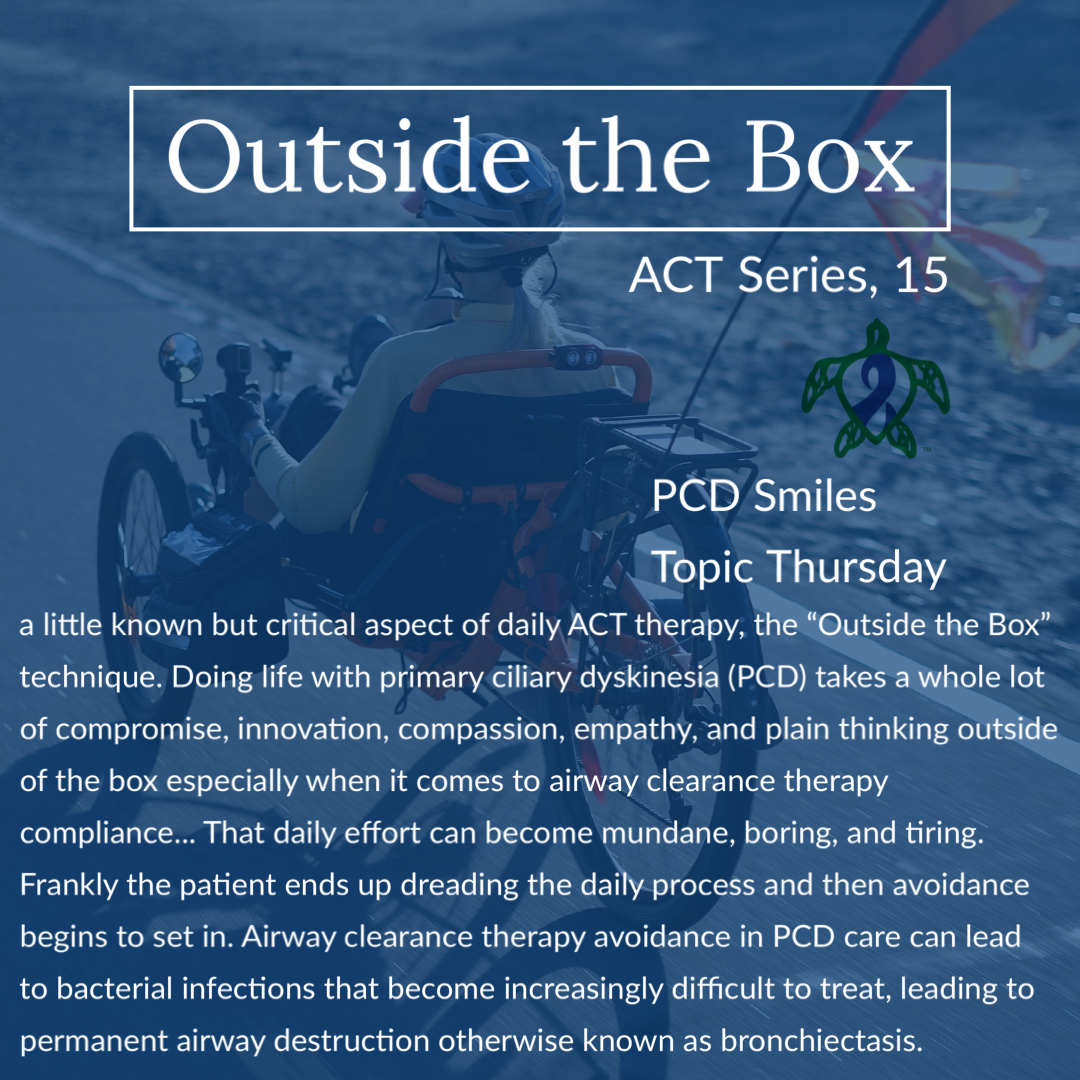
Airway clearance is a major part of PCD management.
Depending on the individual, an airway-clearance program may include techniques such as:
- Chest physical therapy
- Breathing techniques
- Exercise
- Airway-clearance devices
- Other therapies recommended by a healthcare team
The goal is simple:
Move mucus out before it has the opportunity to cause more problems.
Treatment plans are individualized because every person with PCD has a different combination of symptoms, lung function, infections, and other medical needs.
Early Diagnosis Can Protect Lung Health
PCD can be difficult to recognize because chronic cough, recurrent respiratory infections, bronchitis, pneumonia, and breathing problems can have many different causes.
Some people may be treated repeatedly for common respiratory conditions before anyone recognizes the larger pattern.
Early recognition matters because identifying PCD allows appropriate management to begin sooner.
That can include establishing an airway-clearance routine, monitoring lung function, identifying and treating infections, and watching for complications such as bronchiectasis.
PCD Is More Than a Cough
PCD is a genetic disorder of ciliary function—but its impact on the lungs can be significant.
When the microscopic cilia can't effectively move mucus, the lungs lose an important part of their natural defense system. Mucus can accumulate, infections can recur, inflammation can persist, and airway damage can develop over time.
That's why PCD lung care isn't simply about treating the next infection or managing the next cough.
It's about protecting the lungs over the long term.
The message of PCD awareness is simple:
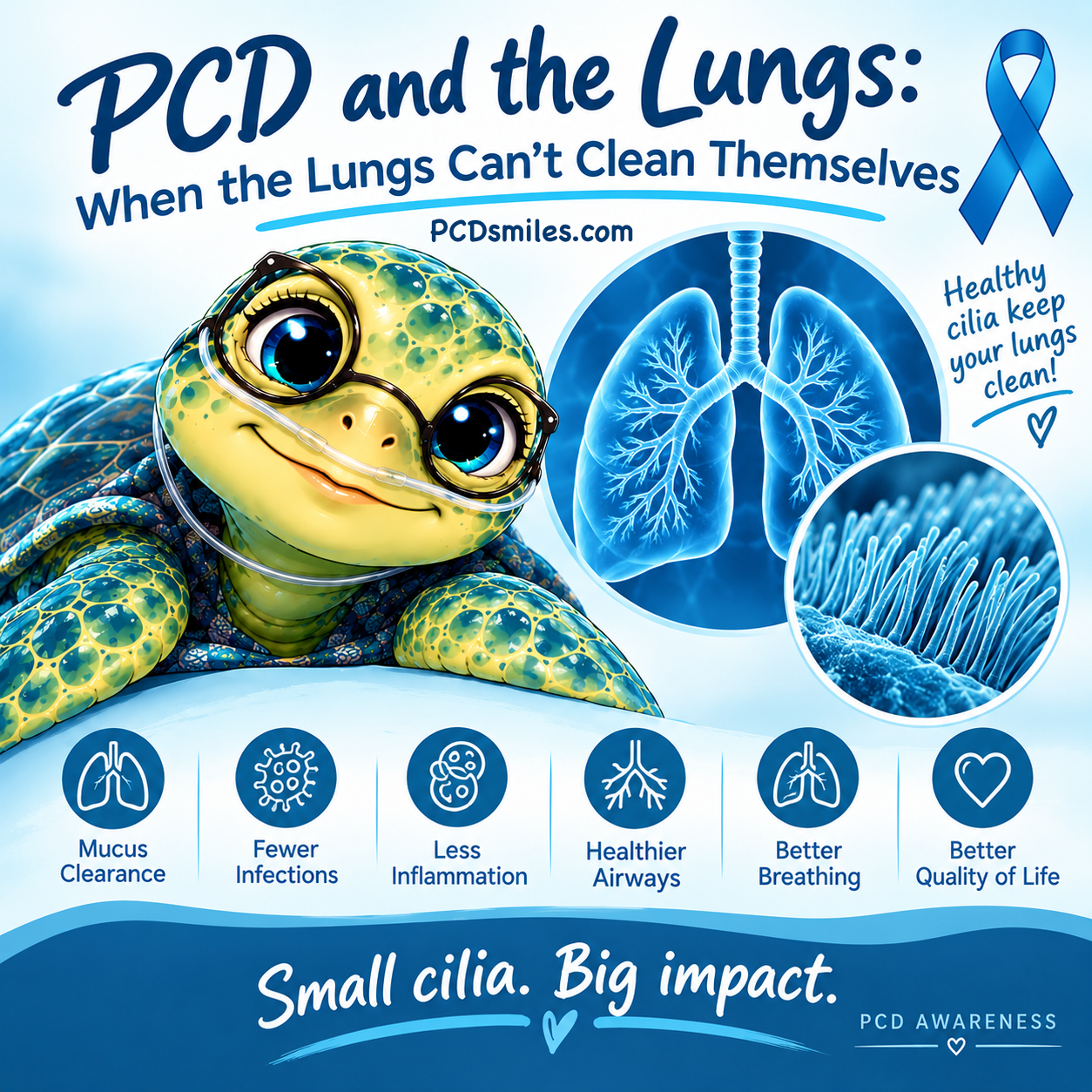
PCD and the Lungs: When the Lungs Can’t Clean Themselves
Understanding how PCD affects the lungs can help people recognize the signs, encourage earlier diagnosis, support better airway clearance, and promote the ongoing research needed to improve treatments.
Healthy cilia help create healthier lungs—and when the cilia don't work, awareness can make a world of difference.
Be sure to join us tomorrow for another conversation about primary ciliary dyskinesia.
Join our Facebook group Turtle Talk Café today.
We have several ways that you can donate to PCD Smiles;
- Visit Smile E. Turtle's Amazon Wishlist
- For more information on how you can donate, please visit our "Donation" page to check out our "Do & Don't policies.
- Or sponsor a PCD Smiles cheer package today!
- To shop for your “Official” turtle care ribbon gear today, visit PCD Style
Thank you for your consideration!
Medical Disclaimer
This article is intended for general educational and informational purposes only and is not a substitute for professional medical advice, diagnosis, or treatment. Infection risks and appropriate prevention strategies can vary considerably between people with PCD based on their lung health, respiratory cultures, treatments, age, and other medical conditions.
Cleaning and disinfection recommendations for respiratory equipment can also vary by device and manufacturer. Always follow the instructions provided by your healthcare team and equipment manufacturer.
Do not start, stop, or change medications, airway-clearance treatments, infection-control practices, or other aspects of your medical care based solely on this article. If you have PCD and are concerned about an infection, worsening respiratory symptoms, or possible exposure to a pathogen, contact your PCD or respiratory healthcare team for individualized guidance.
If you are experiencing severe or rapidly worsening breathing difficulties or another medical emergency, seek urgent medical attention.